
 Organic products
 Phytopreparations
 Makeup
 For the house
Today, groceries labeled "Gluten Free" are increasingly seen on store shelves. Gluten gives the flour product stickiness, elasticity, firmness and when baked - a tempting appetizing look. But for some people, it is deadly. For those who are predisposed to celiac disease - intolerance to foods containing gluten. And if initially gluten-free foods were intended for celiac patients, now more and more healthy and active adherents of proper nutrition are paying attention to gluten-free foods. Why and whether it is worth it, we will figure it out.
What is celiac disease?
Let's start by defining the essence of the term "celiac disease" or celiac disease. This is the name of a disease caused by damage to the villi of the small intestine by certain foods containing certain proteins - gluten (gluten) and proteins close to it in cereals such as wheat, rye, barley and oats (avenin, hordein, etc.) autosomal dominant type and has a mixed autoimmune, allergic, hereditary genesis. Synonyms: Guy - Herter - Heibner disease, gluten enteropathy, intestinal infantilism.
 The history of this disease is ancient. In the first century AD, Areteus of Cappadocia and Caelius Aurelianus described chronic diarrhea and steatorrhea in children and women and named the disease morbus coeliacus, "intestinal disease." In 1952 G. McIver and J. French first successfully applied a gluten-free diet to treat this disease. Previously, it was believed that celiac disease is quite rare - with a frequency of 1: 3000. But modern population studies have shown that the gene responsible for the predisposition to celiac disease is quite common, and the disease itself is present in about 1% of the population. Scientific conferences are devoted to the problem. On May 23, 2009, for the second time in Kiev, the International Day of Celiac Disease in Ukraine was held.
Typical celiac disease with severe malabsorption is indeed rare. The overwhelming majority have extraintestinal manifestations of the disease: iron deficiency anemia, aphthous stomatitis, Duhring's dermatitis, osteoporosis, small stature, delayed puberty, infertility, autoimmune type 1 diabetes mellitus, etc. more often than typical classical celiac disease. In persons predisposed to celiac disease, gluten damages the lining of the small intestine, leading to atrophy and severe malabsorption. The onset of celiac disease often coincides with the introduction of complementary foods containing flour products into the child's diet. Therefore, children aged 6-12 months get sick more often. This period is especially dangerous in terms of provoking celiac disease. Children have frequent foamy stools, plentiful, with a pungent odor, light or with a grayish tinge, greasy. In feces, as a rule, pathogenic intestinal microflora is not detected. Treatment of dyspepsia with conventional means (antibiotics, enzyme preparations, dietary reduction, etc.) does not give an effect. The child becomes lethargic, pale, loses body weight, appetite decreases. Dystrophy gradually develops and children acquire a typical appearance for celiac disease: severe exhaustion, an extinct look, bright mucous membranes, a huge stomach. In some cases, edema develops on the lower extremities, spontaneous bone fractures are not uncommon. Pseudoascites (accumulation of fluid in the atonic intestine) is determined. Further, symptoms of multivitamin deficiency (dry skin, stomatitis, dystrophy of teeth, nails, hair, etc.) join.
A gluten-free diet for celiac disease
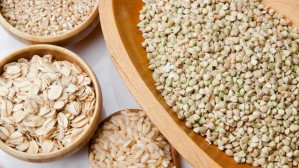 Treatment for celiac disease is complex. The mainstay of treatment is adherence to a gluten-free diet for life. If a gluten-free diet is followed, the body weight of patients begins to recover after 3 weeks. The prognosis with adherence to a diet and proper treatment is favorable. Since a gluten-free diet is also used to treat allergic and inflammatory conditions of the body, it is very important for its effective action to exclude from the diet foods containing numerous synthetic additives, preservatives and dyes. The most appropriate use of the diet in this case is to cook at home with whole foods. There are many alternative food solutions. There are many recipes using gluten-free food mixes. The menu can be quite varied without prejudice to your health.
GLUTEN-FREE PRODUCTS IN NATUR BOUTIQUE STORE
|
Prohibited foods |
Allowed Products |
|
|
Gluten "explicit" in foods containing wheat, rye, barley, oats |
Gluten "hidden" in products that at first glance are not related to cereals |
|
| Cereals, flour, flakes from wheat, rye, oats, barley. Bakery, confectionery and pasta. Semi-finished meat products: cutlets, sausages, sausages and other gastronomic products due to the danger of the presence of gluten additives (hydrolyzed wheat protein) in them * Soy meat substitutes * |
|
Vegetables and fruits.Fresh meat, poultry, fish, eggs (unbread and not marinated); Natural beans, beans, nuts and seeds; Dairy products (except with additives, including food starch). Cereals: buckwheat, amaranth, quinoa, potato starch, corn, flaxseed, millet, soybeans, rice (any), tapioca. |
* Only if the manufacturer states on the packaging (or you find out from other sources, for example, the celiac forum) that the product does not contain gluten, it can be considered "clean".
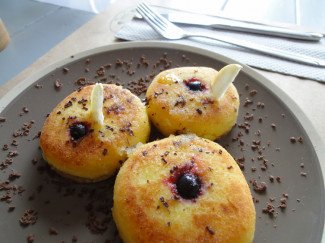
Gluten-free cheese cakes with corn flour
Corn flour gives curd cakes an interesting color and dietary properties. The taste is delicious!
• Salt - a pinch
• Soda slaked with lemon juice
• Currant berries for decoration
Preparation: Grind cottage cheese with an egg. Add sugar, flour, salt. Stir until smooth. Add soda slaked with lemon juice. Form curd cakes, roll in flour and fry in a preheated pan in vegetable oil on both sides. Cook over medium heat with the lid closed. Decorate with berries (frozen or fresh) and grated chocolate or powdered sugar.
According to the recipe of Organic Cafe Maison Blanche (www.maison-blanche.com.ua).
Why Gluten Free?
Many nutritionists believe that chronic fatigue syndrome, impaired immune system and metabolic disorders are associated precisely with excessive consumption of gluten. Therefore, they recommend a gluten-free diet for weight loss and to improve the general condition of the body. Restrictions on gluten-free foods can help you lose weight, improve skin condition, relieve food stress, improve bowel function, and feel good. Of course, you shouldn't exclude gluten from the diet of healthy people. Most likely, it will be correct to consume it in moderation. In any case, everything is very individual and you should not ignore consultations with dietitians.
GLUTEN-FREE PRODUCTS IN NATUR BOUTIQUE STORE
V.V. Stepanenko, Doctor of Medicine, Associate Professor
G.N. Voitenko, MD, DSc, Professor
P.L. Shupyk National Medical Academy of Postgraduate Education, Kiev
Актуальні товари